- Integrations
- Healthcare
Automating Patient Intake for Diagnostic Imaging Centers: Reducing Friction
Patient intake software for clinics and diagnostic imaging centers reduces check-in friction, verifies insurance, and captures consent seamlessly. Improve patient flow and revenue cycle handoffs. Explore tailored solutions for your practice today.

You need patient intake software for clinic and diagnostic imaging centers that does more than collect demographics. In a clinical or imaging setting, intake has to get the order ready, verify insurance, capture consent, and hand clean information to scheduling, the front desk, and billing without creating new work.
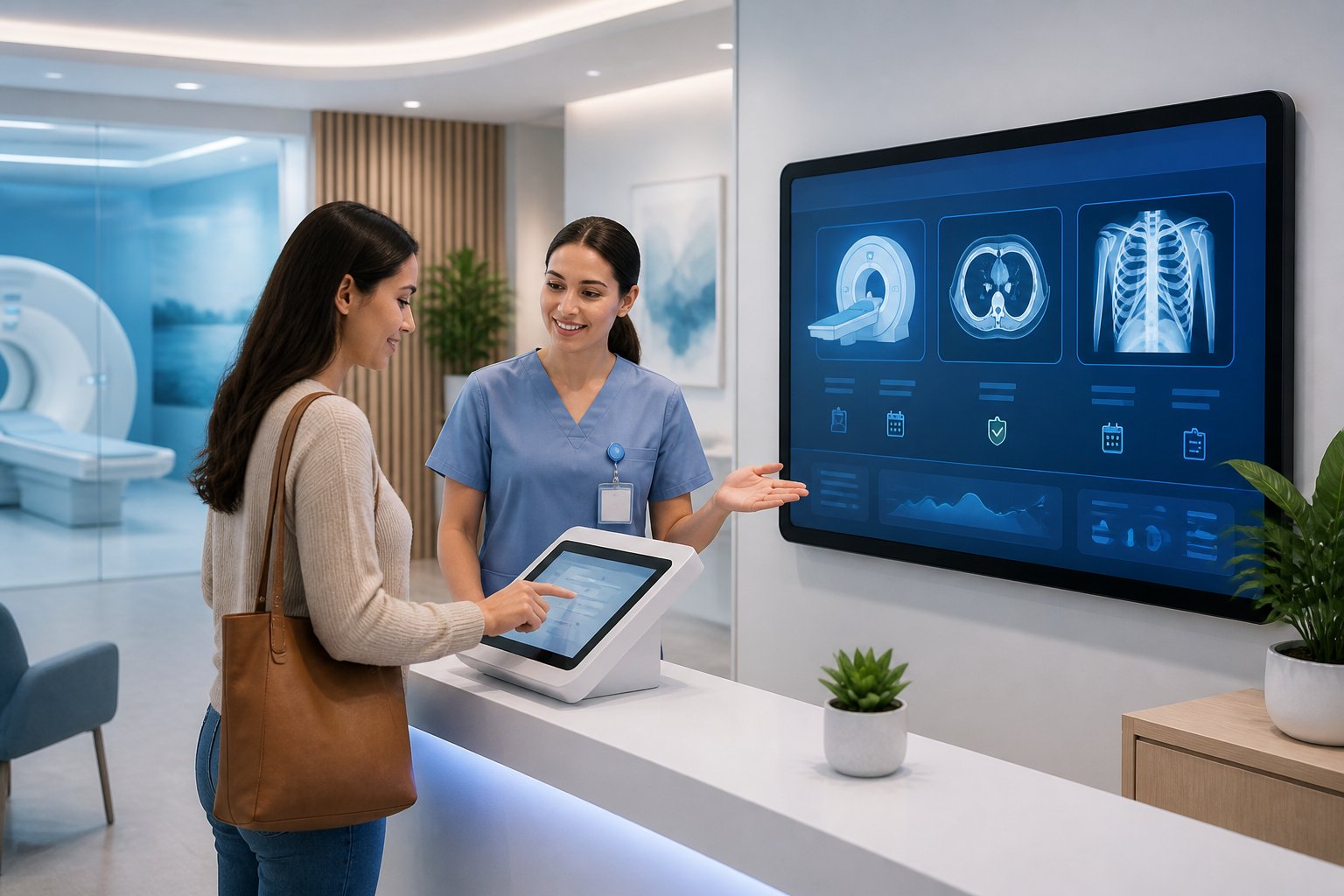

The right intake workflow reduces check-in friction, protects revenue cycle handoffs, and gives your team better visibility before the patient arrives. If you are trying to make that happen without disrupting what already works, a practical operations review, such as the kind GalenXLab Esp uses for rapid prototyping and integration over replacement, can help you map the first high-value step before you scale.
Key Takeaways
- Intake should remove rework, not add another system.
- Clinical and imaging teams need cleaner data before the visit starts.
- Small workflow fixes often matter more than broad software resets.
What Clinic and Imaging Centers Need From Intake
Clinic and imaging centers have intake processes that are often more operationally sensitive than a typical primary care office. Your intake platform needs to support the front end of the visit, the downstream billing process, and the handoffs between scheduling, registration, and clinical review.
Why Clinic/Diagnostic Imaging Intake Differs From General Medical Intake
Clinic and diagnostic imaging intake is tied to orders, modality-specific prep, and payer requirements. A generic workflow can miss the details that matter, such as whether the order is complete, whether the patient has the right instructions, and whether the documentation supports reimbursement.
Your patient intake platform should fit around clinical and imaging operations, not around a broad ambulatory template. That means digital intake forms need to reflect the realities of radiology scheduling, consent forms, insurance verification, and the patient portal experience your team already uses.
The Core Jobs Intake Must Handle Before The Visit
Before the patient walks in, intake should collect demographics, validate coverage, capture consent, and surface missing information early. It should also help the team confirm that the visit is ready for check-in without forcing staff to chase details later.
A useful workflow also supports patient satisfaction by reducing waiting and confusion. When intake is complete ahead of time, the front desk spends less time retyping data and more time helping patients move through the visit.
How Better Intake Supports Patient Experience And Throughput
Patients notice when the arrival process is simple. If they can complete forms in advance, confirm details through the patient portal, and arrive with fewer surprises, the visit starts with less friction.
For your team, that means faster throughput and fewer interruptions. The best systems improve patient experience while also helping the clinic move people through the day with less manual coordination.
Where Intake Friction Usually Starts
Most intake problems begin long before a patient reaches the desk. The weak points usually come from scattered data, disconnected communication, and manual handling that leaves staff cleaning up the same information more than once.
Manual Entry Across Paper, PDFs, Email, And Spreadsheets
If your process still relies on printed forms, emailed PDFs, or copied spreadsheet data, every handoff creates room for error. Staff spend time re-entering information instead of validating it, and the process slows down as volume rises.
Digital forms help, but only if they replace transcription work. If your team still has to move information manually from one place to another, you have not removed the friction, you have only changed where it shows up.
Disconnected Front Desk, Scheduling, And Clinical Handoffs
A common failure point is the gap between scheduling and registration. The patient books one way, arrives another way, and the clinical team discovers missing details after the appointment is already underway.
Document uploads, insurance card capture, and patient communication need to flow through the same workflow. When they do not, the front desk becomes the cleanup crew for problems that started earlier in the process.
Missing Information That Slows Follow-Up And Billing
Incomplete intake creates downstream delays in revenue cycle work. Missing coverage details, unsigned forms, or unreadable uploads can lead to follow-up calls, claim issues, or avoidable rework after the visit.
The practical fix is earlier visibility. If staff can see missing items before the appointment, they can resolve them before the patient arrives instead of chasing them after the fact.
Capabilities That Matter Most In Daily Operations
You do not need a long feature list. You need tools that reduce manual touches, improve completion rates, and make it easier for staff to move from pre-visit to check-in without losing control of the process.
Pre-Visit Forms, E-Signatures, And Consent Collection
Digital intake forms should go out before arrival and collect the information your staff usually has to ask twice. E-signatures matter because they remove paper delays and help close consent forms in one pass.
In clinical and imaging settings, that is not just convenience. It improves the odds that the patient arrives ready, the record is cleaner, and the team spends less time fixing missing paperwork at the desk.
Eligibility Checks And Insurance Data Capture
Insurance verification should happen as early as possible, ideally during intake. Insurance card capture reduces typing errors, and real-time checks help surface coverage issues before they become billing problems.
This is where a patient intake software decision starts to affect operational control. If the data is accurate at the start, billing and registration do not have to rebuild it later.
Reminders, Messaging, And Self-Service Check-In
Automated reminders and appointment reminders help reduce no-shows and late arrivals. Self-service check-in, whether through check-in kiosks or patient portals, can shorten lines and keep the front desk focused on exceptions.
Patient engagement improves when the communication feels simple and timely. A patient communication platform should support the visit flow, not create another channel staff need to monitor all day.
Integration Over Replacement
The best intake tools fit into your current operation. If they force a wholesale reset of scheduling, registration, or billing, adoption usually slips and staff find workarounds.
Connecting Intake To Existing Scheduling And Registration Workflows
Your intake layer should support the way your team already schedules and registers patients. That means clean handoffs, shared status visibility, and fewer duplicate entry steps between the front desk and back office.
In practice, this is where practical implementation matters more than feature depth. A solution that improves the current workflow is usually more valuable than one that promises to replace it.
How Intake Should Feed Electronic Health Records And Billing
Intake data should flow into electronic health records and the practice management system without repeated manual cleanup. When that handoff works, staff spend less time reconciling names, insurance details, and forms.
The goal is cleaner billing and fewer registration errors, not a prettier form. If your intake software can support telehealth integration where needed and remains hipaa-compliant, it becomes easier to extend the workflow without creating new gaps.
Avoiding New Silos In Practice Management Systems
Practice management software should not become another isolated place where data gets trapped. If intake lives in one system, scheduling in another, and billing in a third, the team ends up stitching together the same information all day.
A better model is connected, not fragmented. That is the same logic you see in operations-first work from firms like GalenXLab Esp, where the focus stays on reducing handoff friction rather than adding more tools for staff to manage.
Compliance, Data Quality, And Operational Control
Compliance is not just a legal box to check. In clinic and imaging operations, it directly affects trust, documentation quality, and how much cleanup your team has to do after the visit.
HIPAA Compliance And Secure Patient Data Handling
Your intake software should support hipaa compliance and be hipaa-compliant in the way it handles forms, uploads, and messaging. Secure handling matters because intake often includes sensitive demographics, insurance details, and signed consent forms.
Patients notice when their information is managed carefully. Staff notice when the system makes it easier to store, retrieve, and audit records without digging through paper folders or unsecured inboxes.
Reducing Duplicate Records And Incomplete Documentation
Good intake systems improve data quality at the source. Demographic checks, document uploads, and insurance card capture can reduce duplicate records and patchy files that create downstream confusion.
That matters because a bad intake record is not just an admin issue. It can slow clinical work, delay billing, and force someone else to fix what should have been caught earlier.
Building Visibility Across Teams Without Extra Administrative Burden
The best operational control comes from visibility, not more meetings. When staff can see what is complete, what is missing, and what needs follow-up, they can act earlier with less overhead.
A useful workflow gives teams shared status without adding a second layer of manual reporting. That is the difference between a system that helps operations and one that only looks organized on paper.
How To Evaluate Fit Without Overbuying
A good purchase decision starts with your actual workflow, not with a demo script. You want enough capability to solve the intake problem you have, not a platform that comes bundled with features your team will never use.
Questions To Ask Before Choosing A Platform
Ask how the system handles patient intake from the first invite through final check-in. You also want to know how it supports patient engagement, payment collection, and the patient portal without forcing extra steps for staff.
Pay close attention to whether the vendor can explain the workflow in operational terms. If the answer stays vague, the product may look capable while still creating more coordination work than it removes.
Matching Features To Volume, Staffing, And Workflow Complexity
High-volume clinics and imaging centers need different support than smaller offices. If your team handles many daily arrivals, even small delays in forms, eligibility, or communication can ripple through the whole schedule.
Choose intake automation that matches your staffing pattern and patient flow. A lean system that fits your process is usually better than a broad suite built for a much larger operation.
Warning Signs A Tool Will Add Friction Instead Of Removing It
Be cautious if the product requires too much training, too many logins, or constant manual oversight. If staff have to jump between screens to complete what should be a single flow, the tool is probably adding friction.
Also watch for solutions that look polished but do not fit real intake work. When the workflow is not aligned with your team, the burden shifts back to staff and the patient still feels the delay.
A Practical Rollout Approach For Clinic and Imaging Operations
The fastest gains usually come from one painful step, not a big-bang rollout. Start where the rework is obvious, prove the change, then expand with discipline.
Start With One High-Friction Intake Step
Pick the intake step that costs the most time or causes the most missing information. For many healthcare centers, including both clinic and imaging centers, that is pre-visit forms, insurance verification, or consent collection.
Fixing one step well gives you a cleaner baseline and a better chance of getting staff buy-in. It also keeps the project grounded in actual operational pain instead of abstract digitalization goals.
Prototype Quickly Before Scaling Across The Operation
A short prototype lets you test digital forms, insurance verification, and message timing in a real workflow. You can see where patients get stuck, where staff need exceptions, and where the process needs adjustment before wider rollout.
That is often the most practical way to protect patient satisfaction and the revenue cycle at the same time. Small pilots reduce risk and make it easier to scale what works.
Measure Time Saved, Error Reduction, And Handoff Quality
Do not judge success only by adoption. Track the time spent on registration, the number of missing items at check-in, and the quality of handoffs to billing or clinical teams.
Those measures tell you whether intake automation is actually helping. If the process is faster, cleaner, and easier to manage, the improvement will show up in both staff workload and patient flow.
Frequently Asked Questions
What features should a clinic or imaging center look for in a patient intake and registration system?
You should look for digital intake forms, insurance card capture, e-signatures, eligibility checks, reminders, and patient portal support. The best systems also improve handoffs to billing and registration instead of creating another place where staff must re-enter data.
How does digital intake integrate with EHR and other healthcare platforms?
Digital intake should feed patient demographics, forms, and insurance details into the systems your team already uses, especially the electronic health records and practice management system. In both clinic and imaging environments, the goal is clean front-end data that supports downstream scheduling, documentation, and billing without duplicate entry.
Can patients complete intake forms online before arriving, and how does e-signature work?
Yes, patients can usually complete forms before the visit through a secure link or patient portal. E-signature lets them sign consent forms digitally, which reduces paper handling and helps your staff confirm readiness before check-in.
How does intake software help verify insurance eligibility and collect co-pays for appointments?
Intake software can capture insurance details, run eligibility checks, and flag problems before the appointment starts. That gives your team a better chance to collect accurate co-pays and avoid billing surprises later in the revenue cycle.
What security, HIPAA, and consent requirements should intake software support for healthcare centers?
Your software should support HIPAA compliance, secure document uploads, controlled access, and a clear audit trail for signed consent forms. It should also protect patient communication so sensitive data is not exposed through informal or unsecured channels.
How can a healthcare or clinic center reduce check-in wait times and improve patient experience with automated intake?
You can reduce wait times by moving forms, reminders, and verification steps before arrival. When patients come in with completed paperwork and your staff already has the needed information, the intake workflow moves faster and the visit starts more smoothly.
If you want to automate your operations, streamline processes, and scale up without losing control, let’s discuss your specific situation.
At GalenXLab, we develop custom software and integrations tailored to the unique needs of your clinic, laboratory, or business.
Schedule a call or send us a message, and we’ll help you identify the tasks you can actually automate today.
Ready to build something custom?
Let's talk 30 min and we'll help you identify and build your company's productivity of tomorrow.
Book a call