- Automation
- Healthcare
- Integrations
How clinic automation can reduce wait times in Canada
Clinic automation in Canada reduces wait times by streamlining scheduling, documentation, and patient communication for medical practices. Discover AI tools that cut admin work while maintaining compliance. Explore solutions for your clinic today.

Clinic automation in Canada helps you streamline scheduling, documentation, billing, and patient communication by using software and AI tools that reduce manual work and improve workflow efficiency. You use clinic automation to cut administrative burden, shorten wait times, and free up more time for patient care without replacing your existing EMR.
Across Canada, clinics face long specialist wait times, staff shortages, and rising patient demand. Automation tools such as AI medical scribes, intelligent scheduling systems, digital intake forms, and automated reminders help you manage higher volumes with the same team while reducing errors and missed appointments.
Modern solutions now sit alongside your current systems rather than replacing them. Ambient documentation tools, second-screen clinical decision support, and end-to-end workflow platforms give you practical ways to improve operations while maintaining privacy, security, and regulatory compliance.
Key Takeaways
- Clinic automation reduces administrative workload and improves operational efficiency.
- AI tools and workflow platforms integrate with existing systems to support care delivery.
- Canadian clinics must balance efficiency gains with privacy, security, and compliance requirements.
Addressing Wait Times and Efficiency Challenges
Long wait times in Canadian healthcare stem from intake delays, manual scheduling, heavy administrative work, and workforce strain. Clinic automation targets these pressure points with structured workflows, digital tools, and better use of clinical time.
Patient Intake and Scheduling Bottlenecks
You often see delays start before the appointment even begins. Paper intake forms, manual data entry, and phone-based booking systems slow patient flow and create backlogs at the front desk.
Research in Canada shows median waits for specialist treatment can extend for months, with additional delays tied to referrals and diagnostics. While system-level constraints drive much of this, inefficient clinic processes add avoidable time at the local level.
Automation reduces these bottlenecks through:
- Online booking and self-scheduling
- Digital intake forms completed before arrival
- Automated appointment reminders
- Real-time schedule visibility
When patients submit histories and insurance details online, your staff stop retyping information. Automated reminders lower no-show rates, which helps you use every available slot.
Telehealth also plays a defined role. You can shift appropriate follow-ups and routine visits to virtual care, freeing in-person capacity for urgent or complex cases.
Impact of Administrative Load on Care Delivery
Administrative work consumes a significant share of clinical time. In many Canadian practices, physicians and nurses spend hours each week on documentation, billing, referral coordination, and paperwork.
That time directly reduces patient-facing care. It also slows referral processing, which contributes to longer waits between primary care visits and specialist consultations.
Clinic automation addresses this by centralizing tasks in one system. Electronic medical records, integrated billing, and automated referral tracking reduce duplicate data entry and lost forms.
Consider the contrast:
| Manual Process | Automated Alternative |
|---|---|
| Paper referrals faxed and tracked manually | Digital referrals with status tracking |
| Manual billing submissions | Integrated electronic billing |
| Phone-only scheduling | Online and automated scheduling |
When you standardize workflows, you reduce errors and rework. Research consistently links streamlined administrative systems with improved operational efficiency in healthcare settings.
Staff Shortages and Burnout Implications
Staffing pressures continue to affect clinics across Canada. Surveys have identified staffing shortages as a leading healthcare challenge, with consequences for wait times and continuity of care.
When your team operates at capacity, small inefficiencies become major delays. Repeated interruptions, double-bookings, and manual corrections increase stress and reduce morale.
Burnout affects more than job satisfaction. It influences patient access, communication quality, and retention of experienced staff.
Automation does not replace clinical judgement, but it reduces repetitive workload. Automated reminders, task routing, and standardized documentation templates help your team focus on direct patient care.
By reducing avoidable administrative strain, you create a more stable work environment. That stability supports consistent access to care and more predictable scheduling for your patients.
Core Automation Solutions for Canadian Clinics
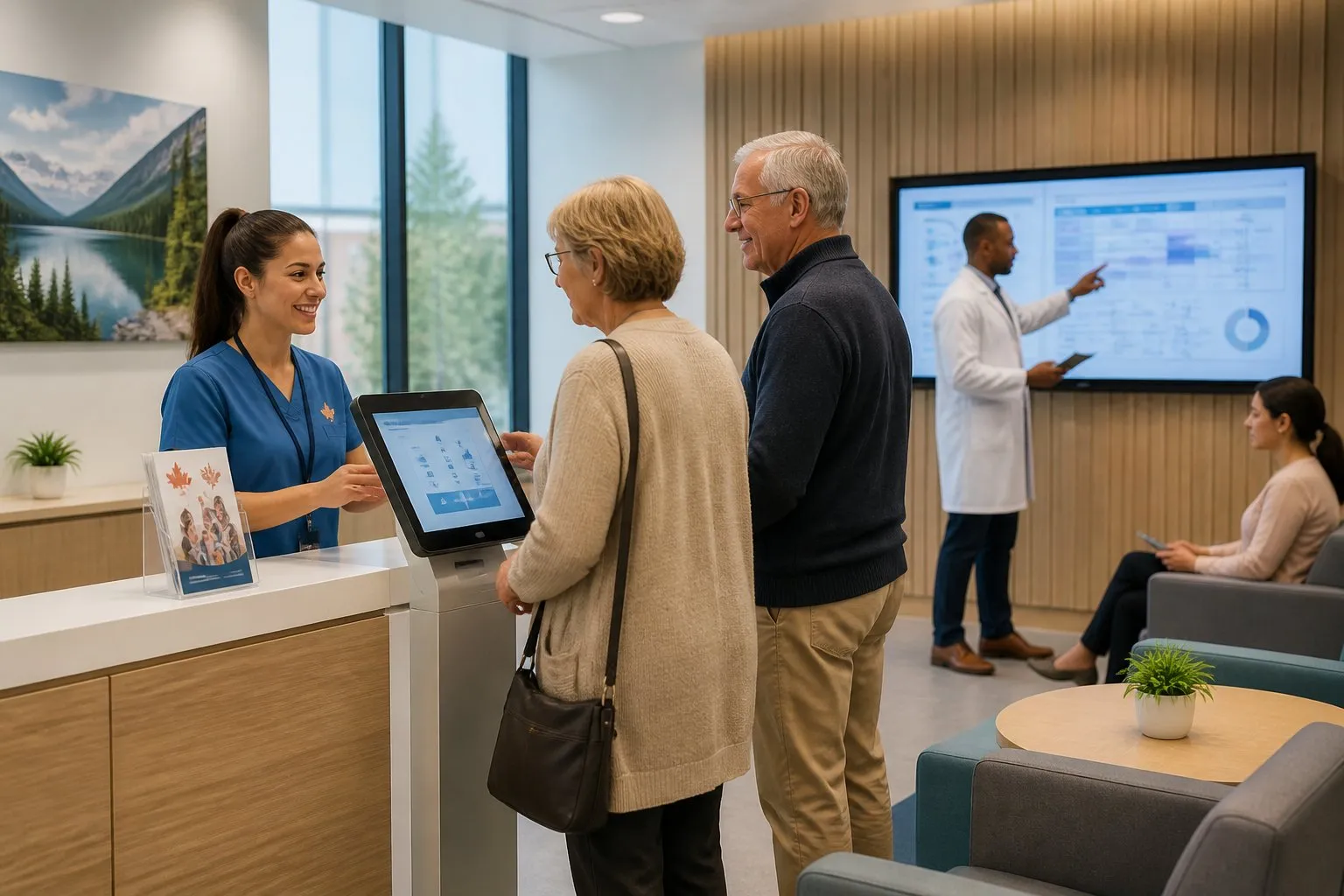
You improve access and reduce administrative load when you automate booking, intake, and patient communication. The right automation solutions fit your existing EMR, support Canadian privacy requirements, and remove repetitive tasks from front-desk and clinical teams.
Appointment Booking and Management Tools
Appointment automation replaces manual phone scheduling with structured, rules-based systems that protect clinician time. You can offer online self-booking that syncs directly with Accuro, OSCAR, PS Suite, or other EMRs, which prevents double entry and calendar conflicts.
An AI receptionist can answer common questions, triage requests, and route urgent issues to staff. This reduces missed calls and shortens wait times without adding headcount.
Key capabilities to look for include:
- Real-time calendar syncing across providers
- Automated waitlists that fill cancellations instantly
- Configurable appointment types with built-in time buffers
- Audit logs that support PHIPA-aligned documentation
You should also ensure Canadian data residency and clear consent processes for online booking. Many clinics require tools that store data in Canada and align with PHIPA and PIPEDA standards.
Strong booking automation improves no-show rates through reminders and simplifies reporting on utilization, referral volume, and provider availability.
Digital Patient Onboarding Systems
Digital onboarding converts faxed referrals, paper forms, and emailed PDFs into structured data inside your workflow. Automation solutions can extract referral details, flag missing information, and prepare a concise pre-consult summary before the visit.
For example, AI tools can read incoming referrals and identify incomplete diagnostic information. Staff can then request missing details before the appointment, which avoids rebooking and wasted consult time.
Effective onboarding systems often include:
- Secure online intake forms with conditional logic
- Automated scoring for tools such as PHQ-9 or GAD-7
- Document uploads linked directly to the patient chart
- Status tracking for referral triage
You should prioritise systems that integrate with your existing EMR rather than replace it. Many Canadian clinics prefer automation that works alongside current platforms and stores healthcare data within Canada.
When intake data flows directly into your charting environment, you reduce manual entry errors and free MOAs to focus on coordination and follow-up.
Automated Communication for Patient Engagement
Automated communication tools keep patients informed without increasing call volume. You can schedule SMS, email, or voice reminders for appointments, preparation instructions, and follow-up care.
An AI receptionist or chatbot can confirm bookings, collect basic updates, and escalate complex questions to staff. This supports continuity of care while maintaining documented communication trails.
Common use cases include:
- Two-way appointment confirmations
- Automated recall campaigns for overdue visits
- Post-visit satisfaction surveys
- Broadcast notices for schedule changes
You must ensure messaging platforms meet Canadian privacy expectations and document consent for electronic communication. Systems should encrypt data and provide clear audit records.
When you combine communication automation with booking and onboarding tools, you create a connected healthcare workflow that reduces administrative strain and supports consistent patient engagement.
Emerging Technologies in Clinic Operations
Canadian clinics now use AI receptionists, workflow automation tools, and deeper EMR integrations to reduce manual work and improve documentation accuracy. These technologies target phone triage, billing, referral management, and compliance tracking rather than replacing core clinical systems.
AI Receptionists and Virtual Assistants
An AI receptionist answers calls, books appointments, and manages routine requests without adding front-desk staff. You can configure it to confirm visits, send reminders by SMS or email, collect intake details, and route urgent calls to a live team member.
Most systems use natural language processing to understand common patient requests such as prescription renewals, appointment changes, and directions. You define scripts, escalation rules, and hours of operation.
Key use cases in Canadian primary care include:
- Automated appointment booking tied to your schedule
- After-hours voicemail triage with structured summaries
- Waitlist management and cancellation filling
- Multilingual call handling
You must review PHIPA compliance, Canadian data hosting, and call recording policies before deployment. AI receptionists reduce call volume, but you still need clear escalation pathways for clinical issues.
Workflow Automation in Clinical Administration
Workflow automation tools move repetitive administrative tasks out of email inboxes and paper queues. You can automate referral intake, fax triage, task assignment, and billing follow-ups using rule-based systems or AI-assisted document recognition.
For example, automation solutions can:
- Extract patient identifiers from inbound PDFs
- Match documents to charts
- Flag urgent keywords for same-day review
- Generate billing prompts based on visit type
In Ontario, clinics face added complexity under evolving payment models that require time tracking and shadow billing. Automation can log activity categories, create structured entries, and prepare reports for audit review.
You should map your current processes before adding automation. Poorly defined workflows create duplicate tasks rather than efficiency gains.
Integration with EMRs and Compliance
Automation only works if it connects directly to your EMR. In Canada, most family practices rely on systems such as PS Suite, Accuro, OSCAR Pro, or CHR.
You need to confirm:
| Requirement | Why It Matters |
|---|---|
| API or integration layer | Enables real-time data exchange |
| Canadian data residency | Supports PHIPA compliance |
| Role-based access controls | Limits privacy risk |
| Audit logs | Documents who accessed or changed data |
Some AI tools operate as “second-screen” applications that sit beside the EMR rather than replacing it. They pull schedule or chart data, process it externally, and push structured outputs back.
You remain responsible for privacy impact assessments, vendor agreements, and clear documentation policies. Strong integration reduces double entry and strengthens compliance instead of adding another disconnected system.
Key Providers and Case Studies in Canada
Canadian clinics now deploy automation across research workflows, front-desk operations, and clinical documentation. You can see measurable impact in AI reception, ambient scribing, and workflow tools that sit on top of existing EMRs rather than replace them.
Insig: Automation and Research Tools
Insig focuses on healthcare automation solutions that connect clinical care with structured research data. You use its tools to capture standardized information during routine visits without adding separate research workflows.
The platform embeds digital forms and clinical templates into your EMR environment. This approach supports real-time data collection for primary care research, quality improvement, and chronic disease management.
Insig also supports automated patient intake and follow-up surveys. You reduce manual data entry while improving data consistency for audits and studies.
For clinics involved in research networks, this model matters. You can generate clean datasets directly from patient encounters, which lowers administrative burden and supports evidence-based decision-making.
PulseAI and the Adam System
PulseAI develops AI receptionist and patient communication tools designed for Canadian clinics. Its Adam system automates appointment booking, call handling, and basic patient triage.
You can route incoming calls through an AI receptionist that answers common questions, books visits, and sends reminders. This reduces front-desk congestion and missed calls during peak hours.
The system integrates with scheduling software and can flag urgent issues for human review. You maintain oversight while automating repetitive tasks.
For clinics facing staffing shortages, this type of automation improves access without expanding headcount. It also supports bilingual communication, which is essential in many Canadian communities.
ClinicIQ, MarkiTech, and Notable Canadian Vendors
ClinicIQ provides analytics and workflow optimisation tools for primary care. You can track billing patterns, appointment utilisation, and performance metrics in one dashboard.
MarkiTech focuses on digital health platforms, remote monitoring, and AI-enabled virtual care. Its solutions often support chronic disease management and home-based care models.
Other Canadian vendors specialise in AI scribes and clinical co-pilots. Companies such as Tali AI and Scribeberry offer ambient documentation tools that generate notes from patient encounters.
These tools sit alongside your existing EMR rather than replacing it. You reduce documentation time while maintaining compliance with Canadian privacy standards, including PIPEDA and provincial regulations.
When you evaluate vendors, focus on three factors:
- EMR integration
- Data residency in Canada
- Clear workflows for staff adoption
These elements determine whether automation improves operations or adds complexity.
Maximizing Benefits While Ensuring Privacy and Compliance
Clinic automation in Canada delivers measurable gains in care quality, efficiency, and patient satisfaction when you implement it with strong privacy controls and workflow alignment. You need to balance performance, regulatory compliance, and practical integration into daily healthcare operations.
Improved Patient Outcomes and Experience
Automation solutions in healthcare reduce administrative friction and give you more time for direct patient care. Automated appointment reminders, online booking, and digital intake forms cut no-shows and shorten wait times. Patients complete forms before arrival, which speeds up triage and improves data accuracy.
AI-enabled tools such as clinical documentation support and predictive analytics also strengthen decision-making. For example, automated charting and AI scribes reduce documentation time and support more complete records. You spend less time typing and more time reviewing patient concerns.
Automation also improves continuity of care. Integrated EMRs, e-prescribing, and secure messaging keep care teams aligned on treatment plans, test results, and follow-ups. This coordination reduces errors and supports consistent care across providers.
When you implement automation with clear workflows and staff training, you improve both clinical outcomes and the overall patient experience without increasing workload.
Data Security and Regulatory Considerations
You must align automation systems with Canadian privacy laws such as PIPEDA and applicable provincial health information statutes. These laws govern how you collect, store, use, and disclose personal health information.
Automation solutions should provide:
- End-to-end encryption for data in transit and at rest
- Role-based access controls to limit staff access
- Audit logs to track system activity
- Canadian data residency options, where required
If you deploy AI in healthcare settings, you remain responsible for ensuring that its use complies with existing privacy and consent requirements. Vendors should demonstrate alignment with Canadian healthcare standards and provide clear documentation on data handling practices.
Cybersecurity planning also matters. Cloud-hosted EMRs and automated backup systems can strengthen data resilience during cyber incidents, but only if you configure them properly and test response plans regularly.
Adapting Solutions to Unique Clinic Workflows
No two clinics operate the same way. You need automation solutions that reflect your specialty, patient volume, staffing model, and funding structure within Canada’s healthcare system.
Start by mapping your current processes. Identify repetitive administrative tasks, documentation bottlenecks, and communication gaps. Then match automation features directly to those issues instead of adopting broad systems you may not use.
Key considerations include:
| Area | What to Assess |
|---|---|
| Clinical documentation | Compatibility with your EMR and charting style |
| Scheduling | Support for complex billing codes or referral pathways |
| Integration | Connectivity with labs, pharmacies, and provincial systems |
| Training | Ease of onboarding for physicians and administrative staff |
Choose vendors that understand Canadian healthcare requirements and can adapt configurations without disrupting care delivery. When automation fits your workflow, you gain efficiency without creating new administrative burdens.
Browse our portfolio of solutions for clinics and laboratories and discover how we design customized systems to improve efficiency, safety, and the patient experience.
Ready to build something custom?
Let's talk 30 min and we'll help you identify and build your company's productivity of tomorrow.
Book a call